Your team answers first. The front desk takes what they miss. You see all of it.
Most AI receptionists replace your phone line. HiThisIs sits in front of it. Your own staff phones ring first, together; if nobody picks up, the automated front desk takes the call, captures the details, and the report reaches you before the caller has put the phone down. Every call, answered by a person or not, is recorded, written up, and on one list.
Ring the whole team at once
Reception, the second desk phone, the manager's mobile: list them and they ring together for as long as you set. The first to pick up takes the call. A caller who hangs up while your phones are ringing is not lost: three minutes later you get their number and how long they waited, unless they already got through.
Then the front desk picks up
If nobody answers in time, the automated front desk takes over in your language, asks your questions in your order, and never invents a day, a time, a doctor or a price. It reads a date back before it is noted and tells a caller plainly when you are closed.
Hand back to a person, in stages
When a caller asks for a person, or describes an emergency, the front desk connects them: your reception group first, then the owner's phone, each for the seconds you choose. A conversation that ends at reception ends there; nobody else's phone rings afterwards.
Every call written up
Calls your staff take are recorded and summarised, so you know what was promised without listening to the tape. Calls the front desk takes are checked against the recording before the report goes out: the name, the day, the time and your own questions come from the caller's words.
See how your team is doing
Switch on scoring and each call your staff answered is marked on greeting, listening, knowledge, resolution, courtesy and closing, with two things to keep and two to improve. Per phone, per week, in plain words. For you, not for the caller.
One list for every call, whoever answered it
Screens from a demo clinic. The names and numbers are examples; the layout is what you get.
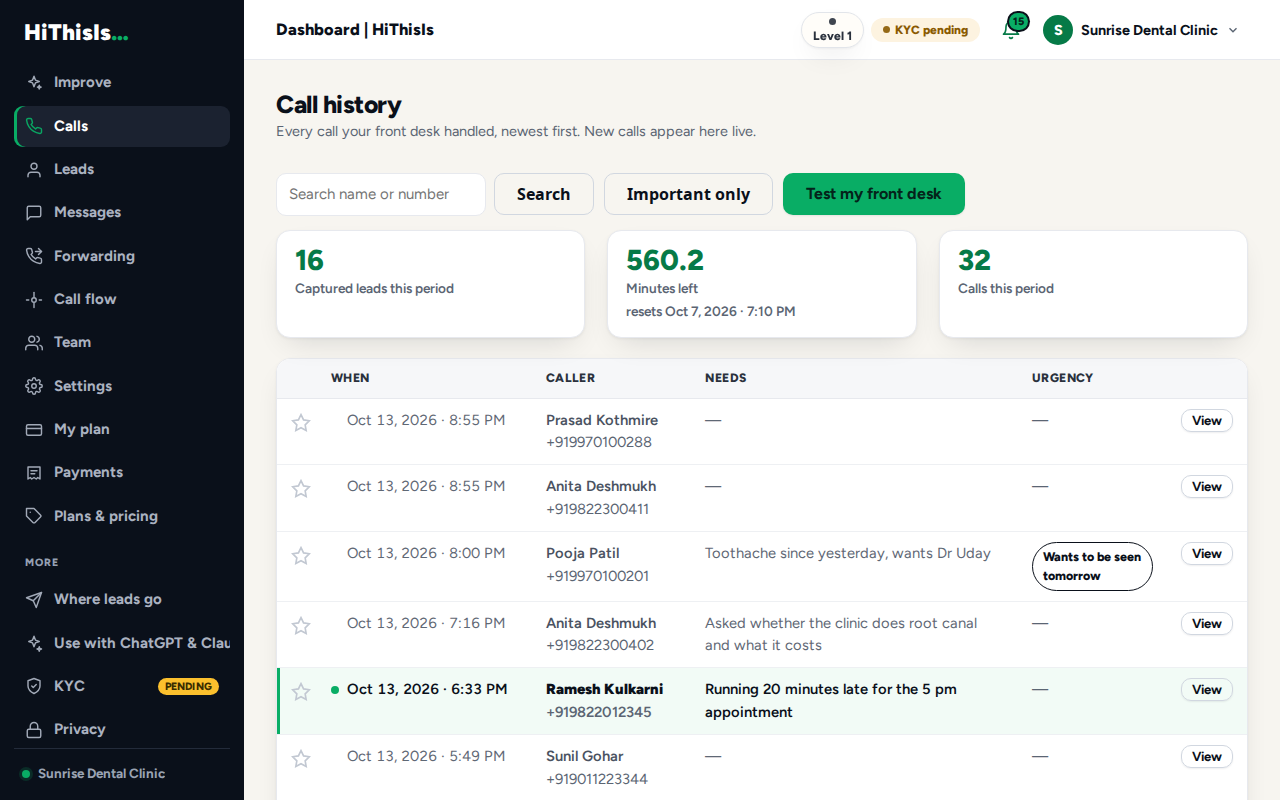
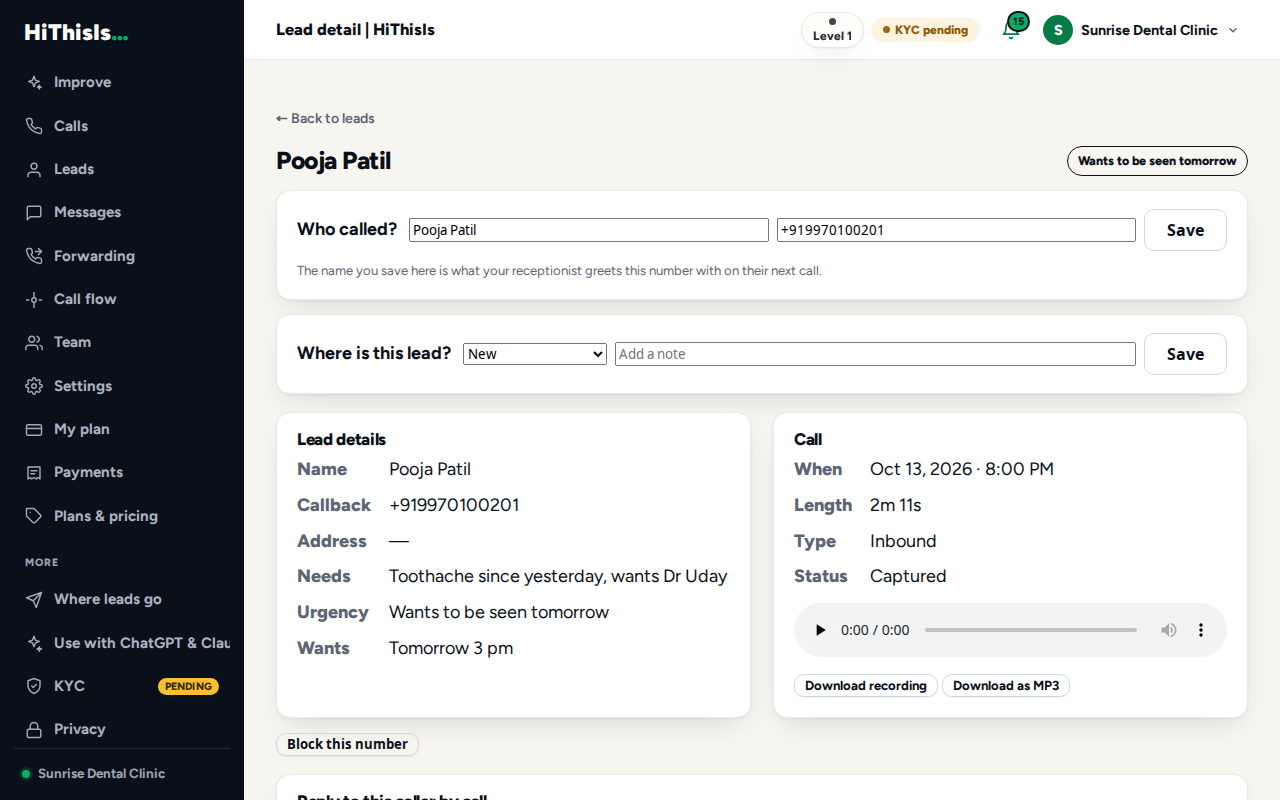
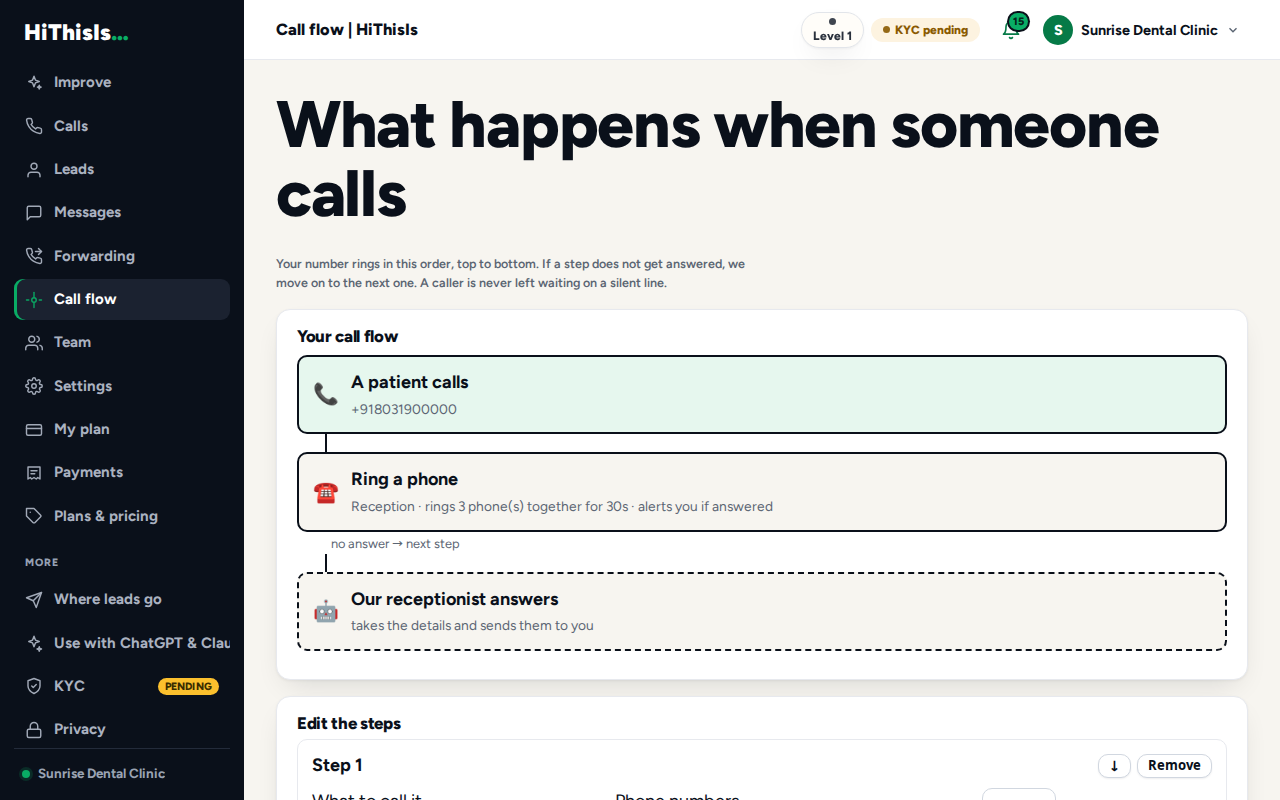
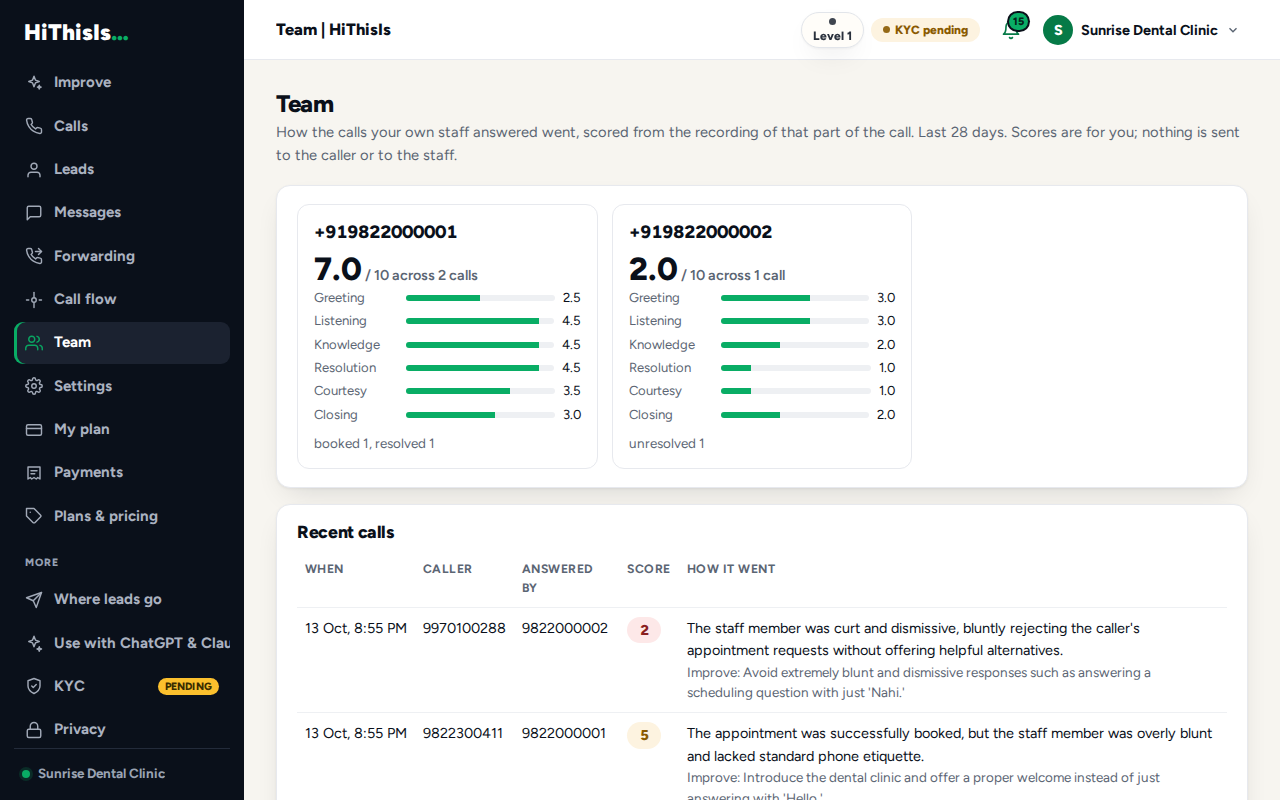
A generic AI receptionist answers instead of you. This one works with you.
Your staff stay first
The front desk is the fallback, not the gatekeeper. Nobody who wants your receptionist has to get past a machine.
Facts from the caller, not the model
Reports are checked against the recording. A day the caller ruled out is not booked; a doctor they never named is not written down; a number they did not say is never read back.
Your rules, in your words
Which doctor sits when, what to ask, what never to promise, who is on leave this week. Written in plain language, changed from your phone, in force on the next call.
Missed calls are followed up
A caller who rings off while your phones ring is reported with their number and the wait, so someone rings them back.
Reply by call
Type a note to a caller and the front desk rings them and says it, day and time exactly as you wrote, then tells you what they answered.
A record of every call
Recording, transcript and summary for every call, answered by a person or not, with the audit trail a clinic needs.